





Air admittance valve
Drainage systems in buildings must be vented to allow the escape of gases and odours, to allow the release of pressure in front of flowing waste and to allow air to re-enter the system following the passage of waste.
This can be achieved by connecting waste pipes to a soil vent stack (SVP). SVPs are often seen running vertically on the outside of domestic properties, and have an open vent above eaves level allowing air into and out of the system without odours or gases causing nuisance. For more information see: Soil vent stack.
Where it is not practical to connect waste pipes to a traditionally-vented SVP, an air admittance valve (AAV, sometimes referred to as a Durgo valve) may be used.
This may be necessary for example when new appliances are installed in an existing building and there is no clear route to the SVP, to close washing machine standpipes, for island units, to reduce the amount of pipework penetrating the roof or walls of a building and so on.
Air admittance valves open to allow air into the system when there is negative pressure, and close under positive pressure preventing gasses from entering the building. This maintains trap seals and siphons within the system, but does not relieve positive pressure.
Approved document H of the building regulations sets out the circumstances in which air admittance valves may be used, and requires that:
- They comply with BS EN 12380:2002: Air admittance valves for drainage systems. Requirements, test methods and valuation of conformity.
- They do not adversely affect the amount of ventilation necessary for below ground sewers.
- They are located in areas with adequate ventilation.
- They have clear access for maintenance and for the removal of blockages.
- They are not used outside or in dust laden atmospheres.
- Where there is no open vent on the system or connected drains, alternative arrangements are made to relieve positive pressures (as air admittance valves only relieve negative pressure, not positive pressure).
NB When installing drainage and ventilation pipework in high-rise buildings, traditional design standards dictate that a secondary ventilation stack is used to overcome air pressure changes. However, products such as the Polypipe Terrain P.A.P.A® and Pleura valves are a proven alternative. The P.A.P.A® (positive air pressure attenuation) valve is designed to react to and attenuate positive pressure transience within the drainage stack of high-rise developments providing a suitable venting solution for any multi-storey building.
For more information see: Secondary Ventilation Stacks in Tall Buildings.
[edit] Related articles on Designing Buildings Wiki
Featured articles
Check out some of the best features and news from Designing Buildings as well as key stories from around the web.

Accommodating the Victorian and Edwardian working woman. Book review.
Rethinking passive fire protection in design

PFP demands the same level of design rigour as structure or services.

38% of Gen Zs feel safe when a fire door is wedged open.
Stunning images from around the world

Shortlist for CIOB’s Art of Building photography competition.
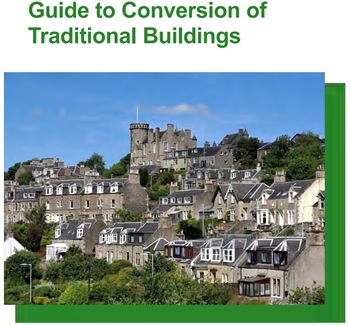
Guidance for conversion of traditional pre-1919 stone buildings.
Industrial heritage in the Ruhr
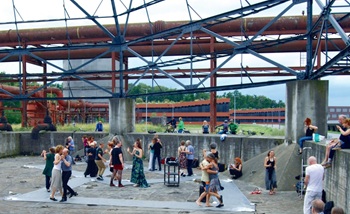
A marked difference to the fate of industrial landscapes in the UK.

Communities will be able to build their own clean energy.
Why diversity and inclusion matters for SMEs

CIOB’s D&I Charter shows how practical changes can support long-term growth.
Cut electricity bills to power growth

Coalition sends joint letter to the Chancellor.

Gasholders: a history in pictures. Book review.
Recognition, influence and growth

SocEnv identifies three strategic pillars in new strategy to 2045.
Discover the future of roofing, cladding and insulation.
Comments